Redesigning a learning platform into a modular workspace
OVERVIEW
12 months, 180°
When I joined, Naviri was focused on teaching founders how to build a business. But this wasn't what the market needed. After a year of iterative research and design, we transformed it into a modular workspace that guides users and acts as a consultant instead.
PROBLEM(S)
Users want to improve by doing, not learning
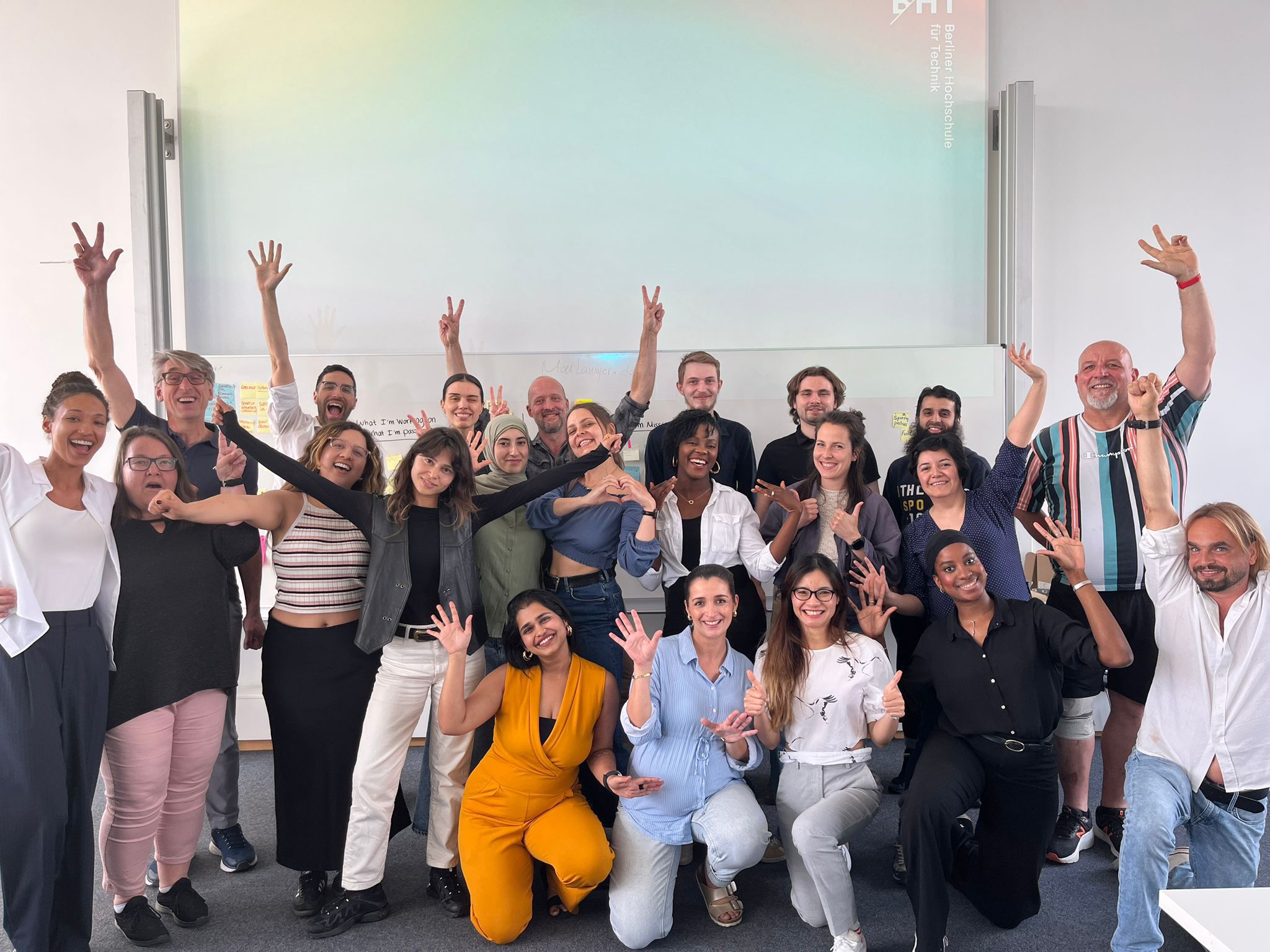
Bootcamps with early adopters quickly showed that users do not want to pay for another e-learning tool. What they truly need is a round-the-clock companion that knows all about their business and can efficiently guide and reassure them.
PROCESS
Observe, design, repeat
Rapid iteration was key to finding product-market fit. Over time, we slowly moved away from structured learning to reach a flexible modular workspace.
1. Building the Data Model
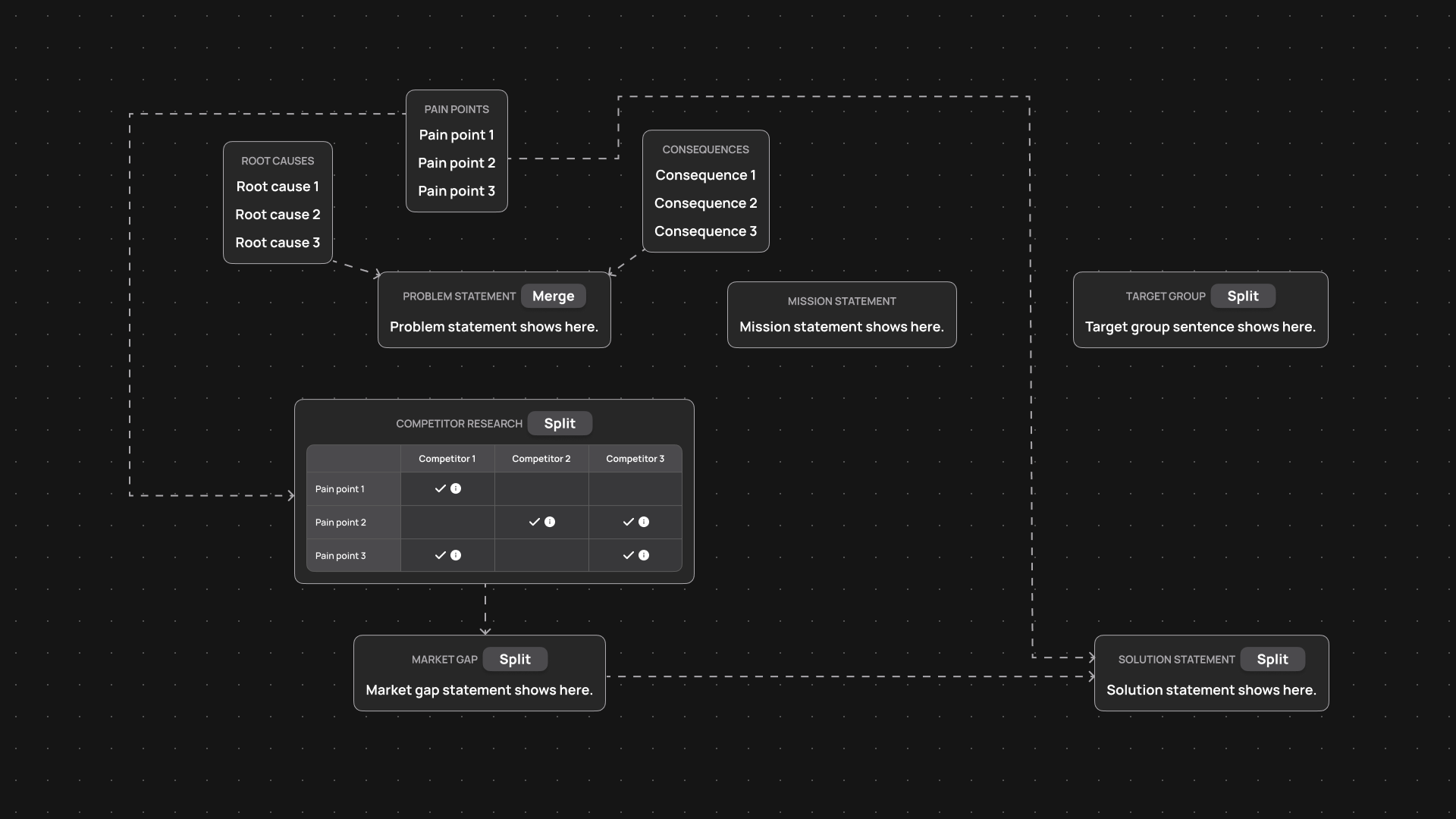
Because we wanted to harness the power of AI for business development, we came up with a solution to the main weakness of competitors: the lack of context. To build the most accurate and reliable AI, we designed a custom data model built around small, structured company data, which connect to each other to form a living knowledge graph of the user's business.
2. Driven by Data
I directly reflected the knowledge graph in the next prototype: the goal was now to build a digital twin of your company. But another bootcamp revealed major pitfalls: a significant user dropoff due to the amount of data to add manually as well as the restrictive nature of the graph. They felt like they were doing admin work.
3. Some time to breathe
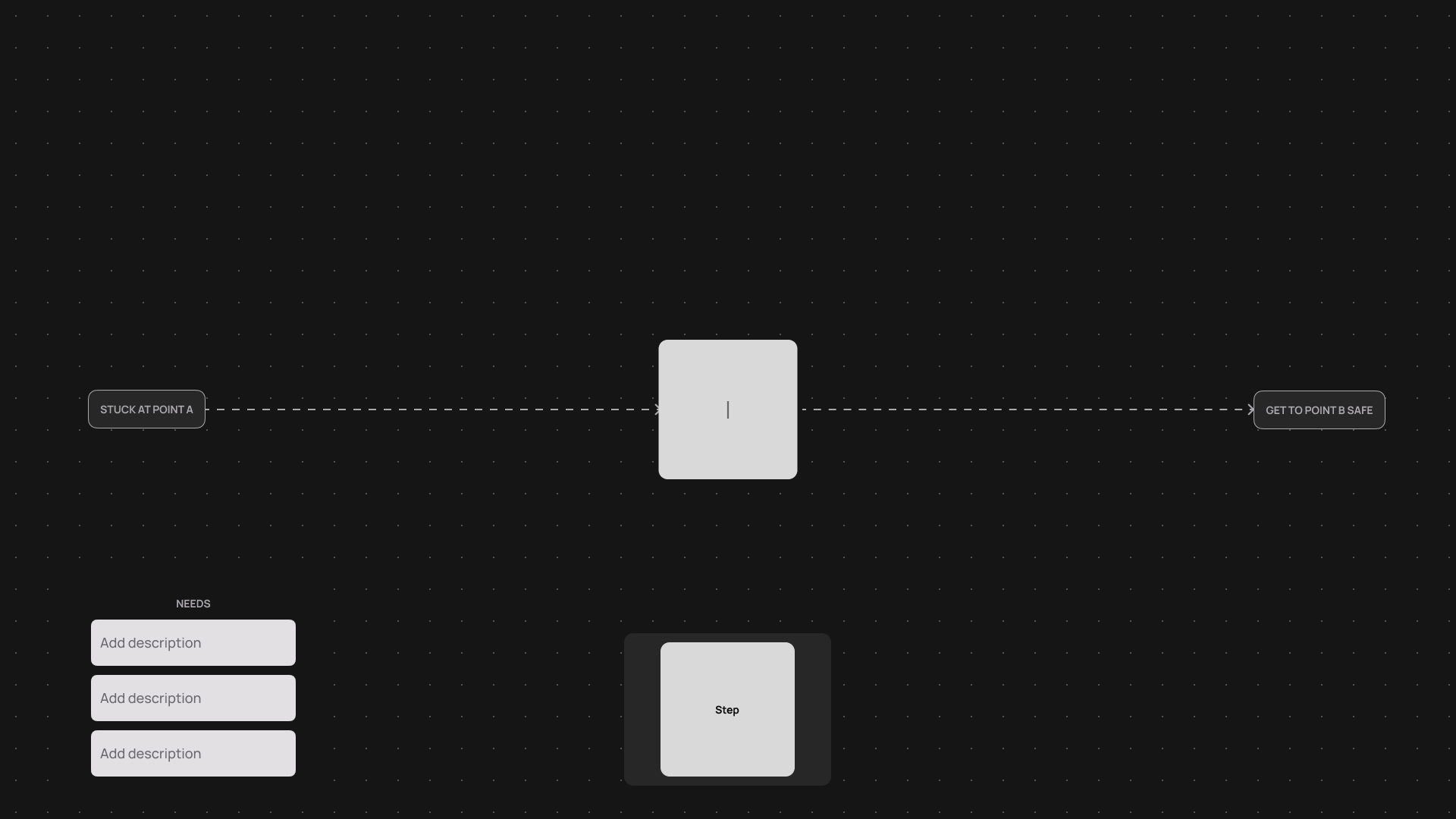
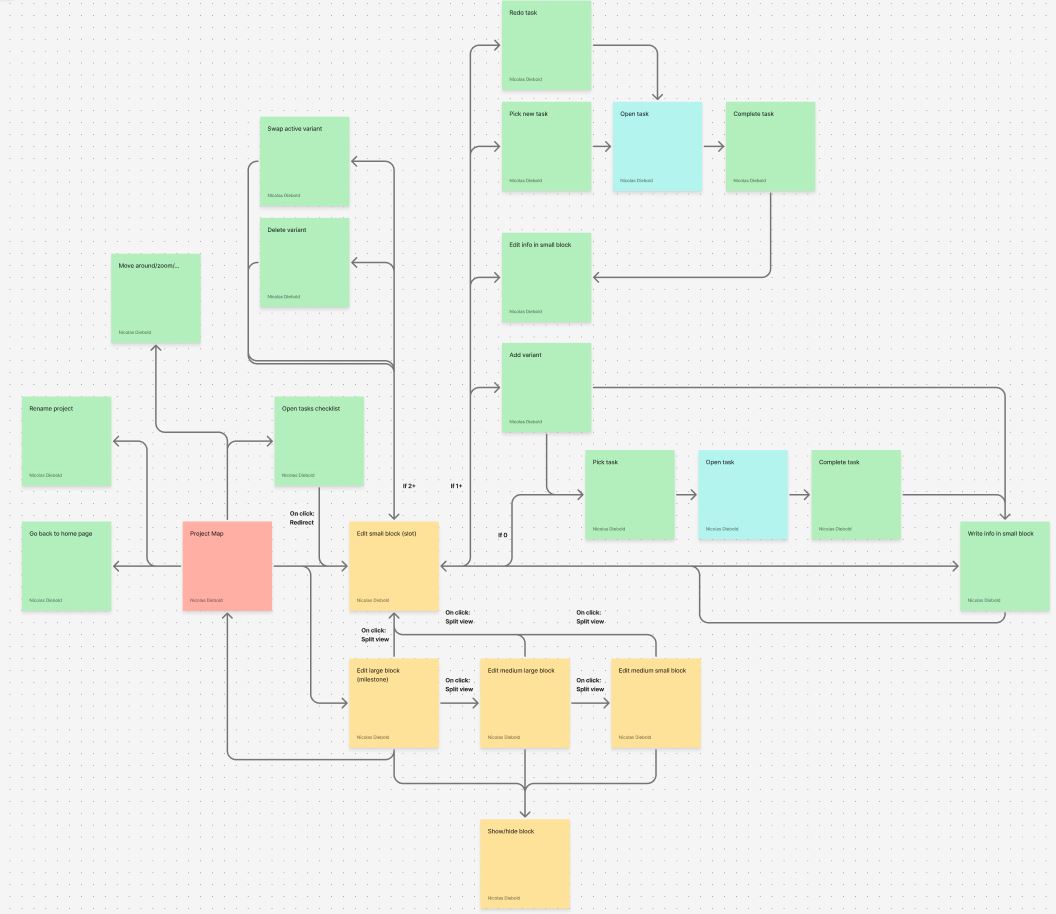
It was clear that the features had enough value, but the product was too complex. So I took the decision to sit down with users and to re-build the main flows, although it would take precious time. The conclusions: inputting data manually is too much work and limiting the graph to specific dependencies is too restrictive.
4. Rebranding and Web Presence
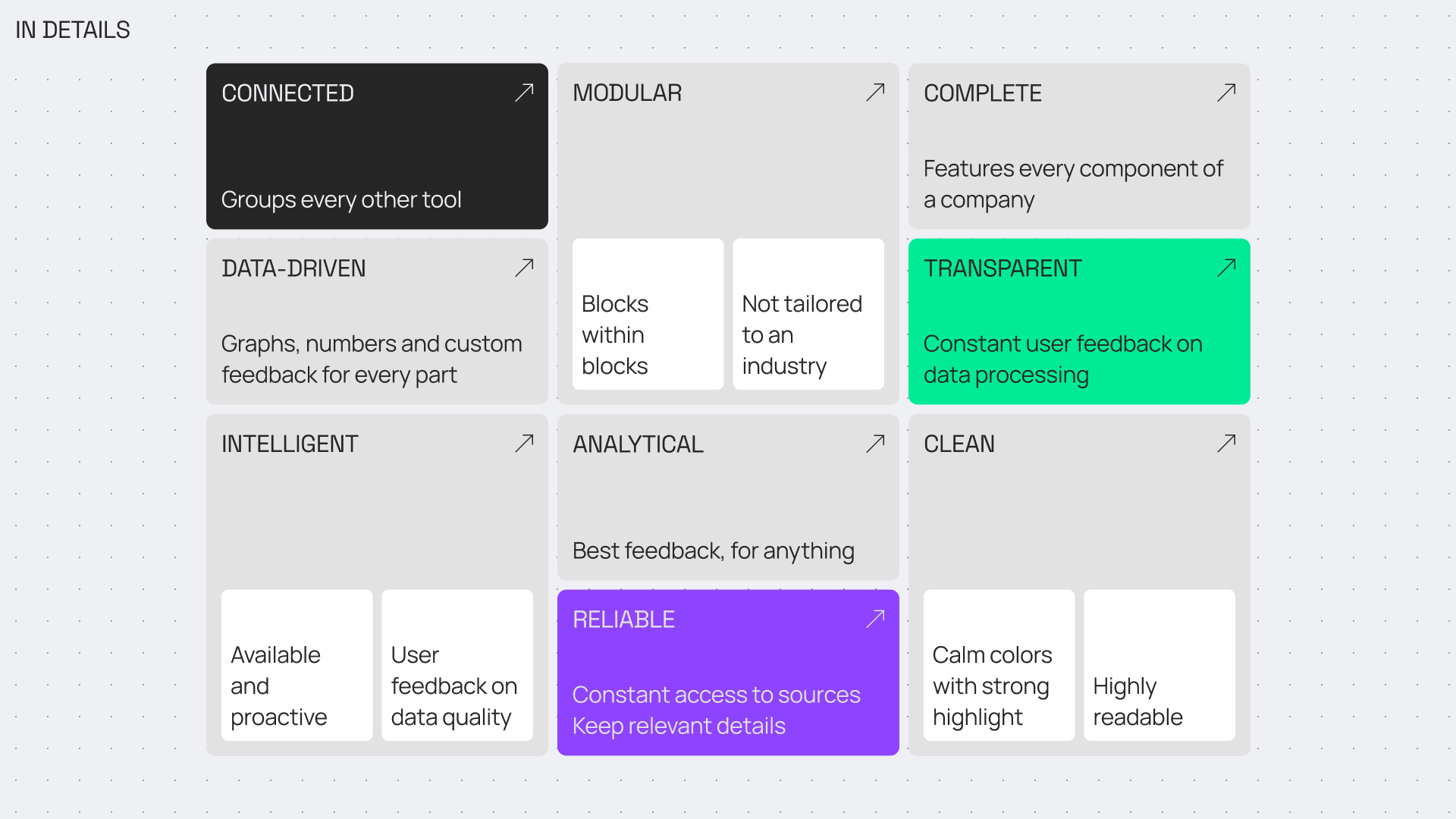
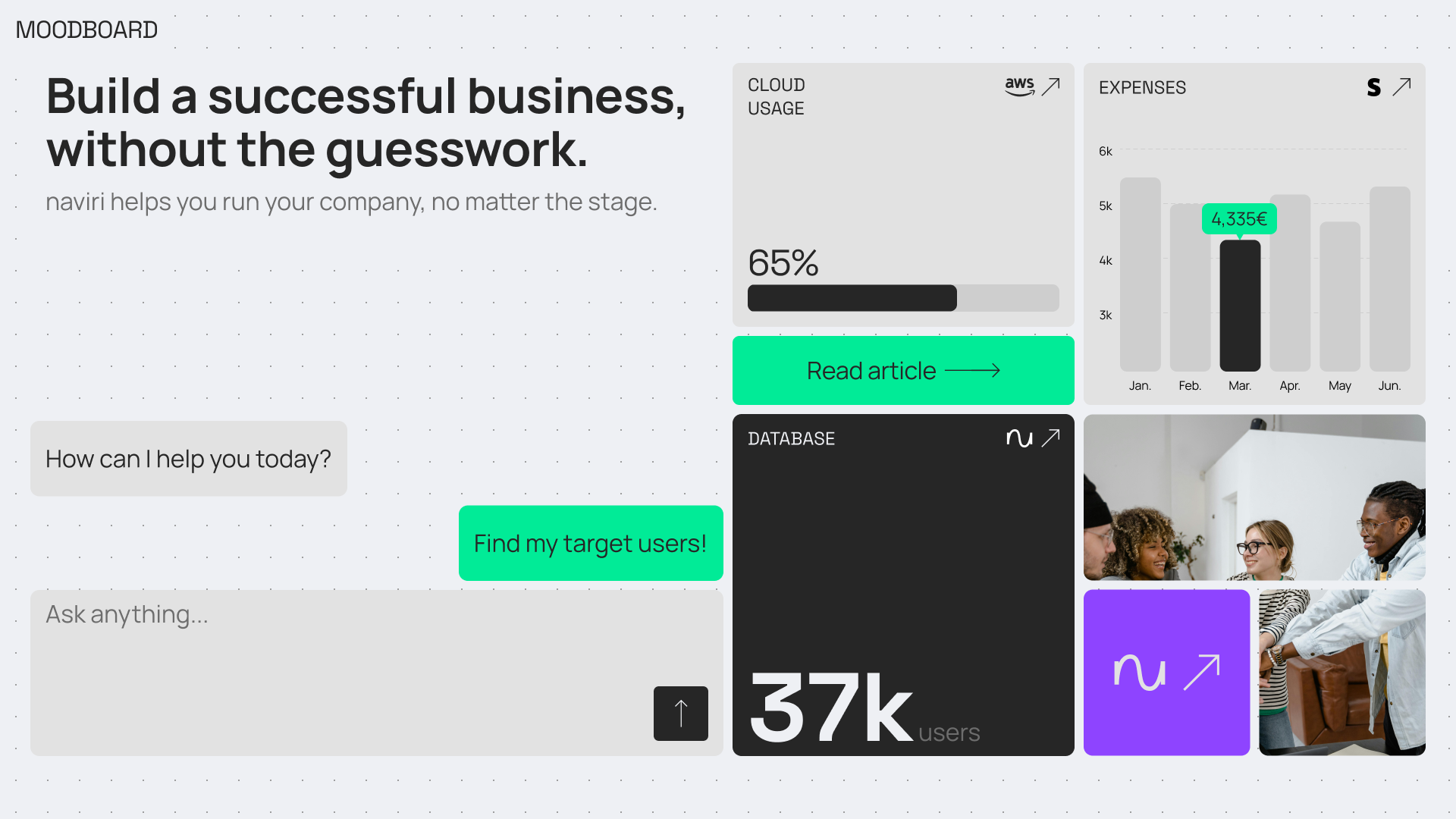
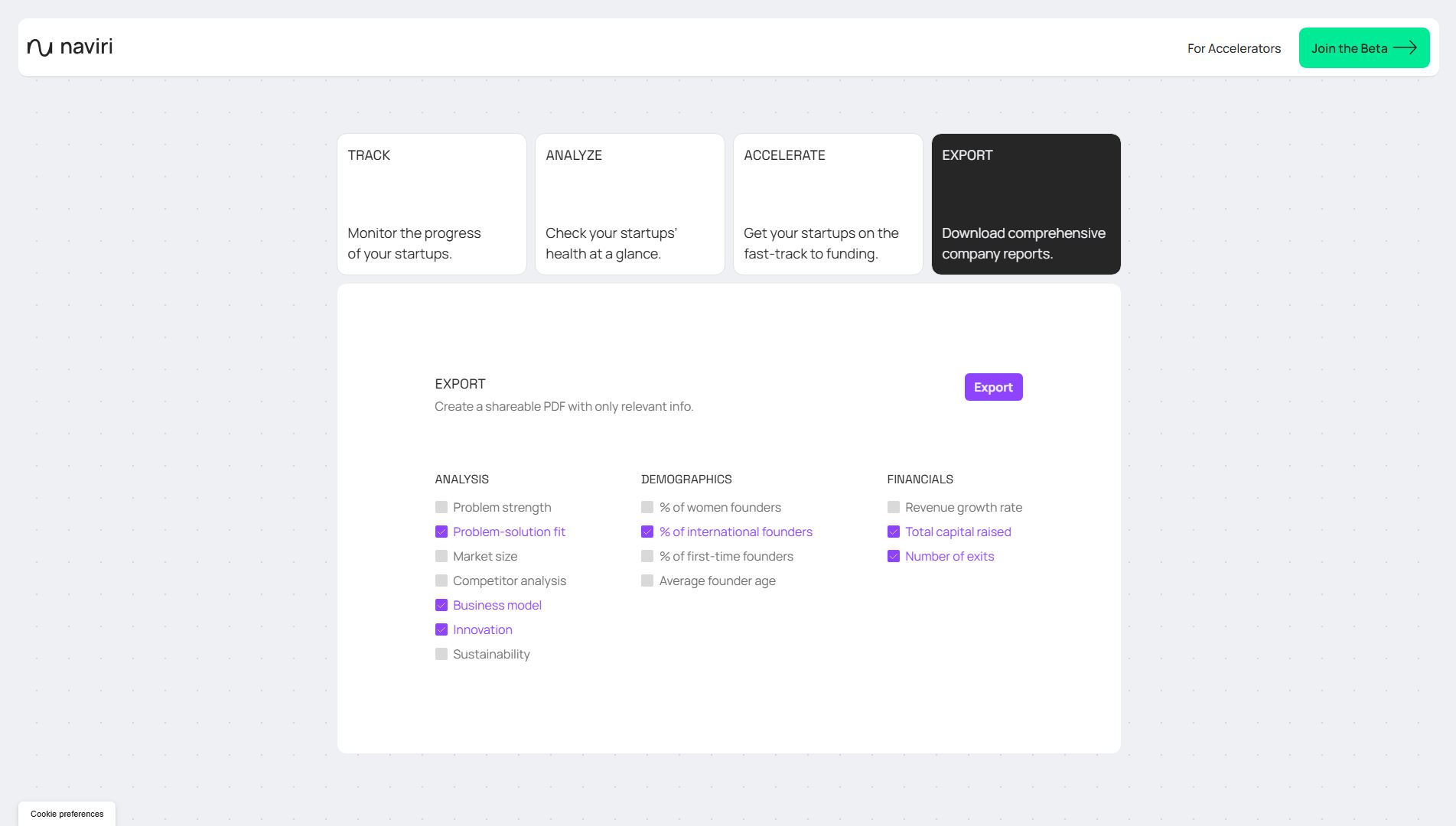
As we were moving on to investor pitching, I insisted that we first needed proper branding that reflected the product's values: analytical, safe and modular. This massive overhaul included brand guidelines and a whole website redesign.


5. AI-backed Freedom
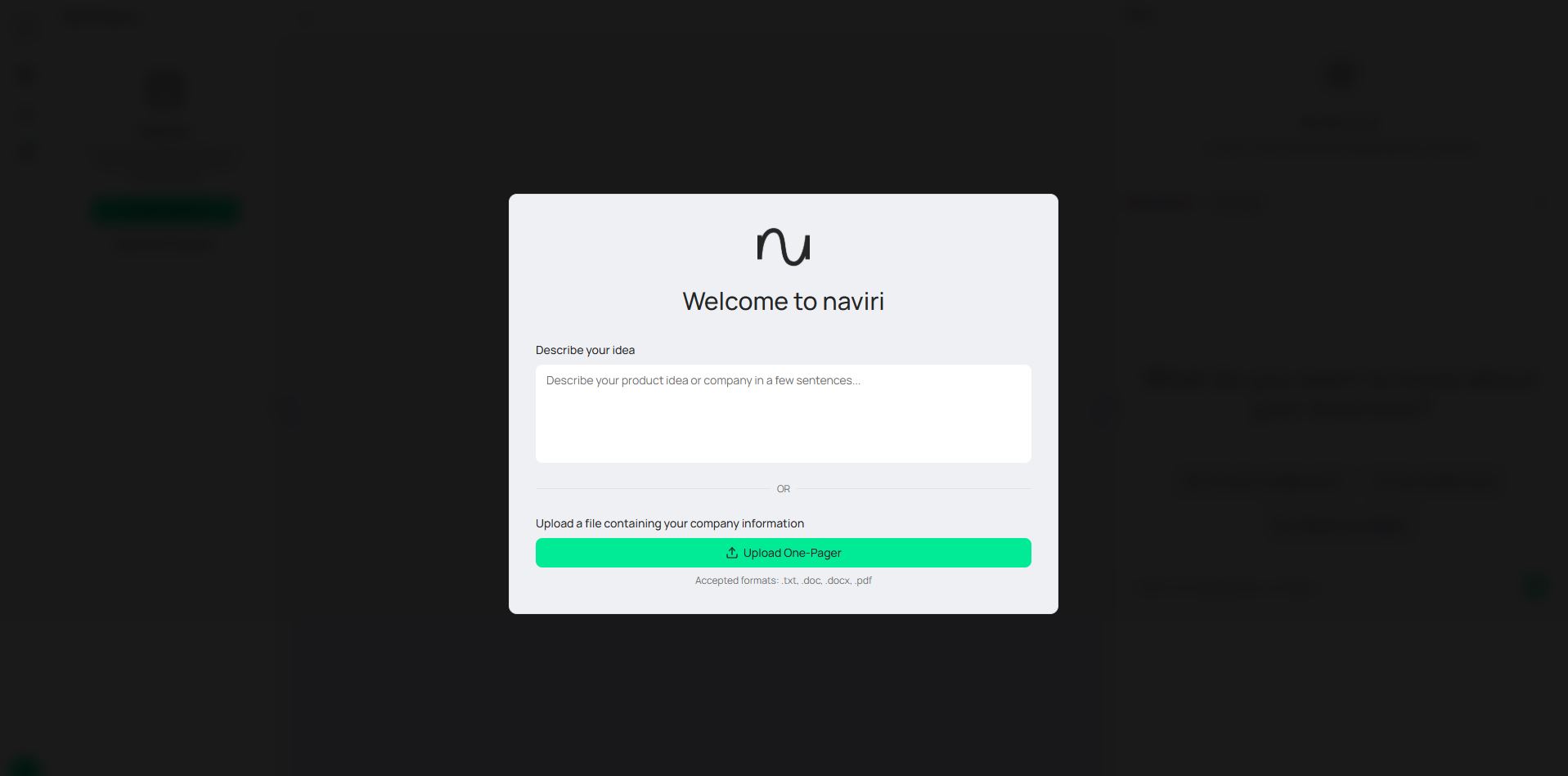
To solve the main issues, I identified the bottlenecks: onboarding and freedom. The onboarding now allowed them to jump in with their current information in a chat-like interface, or to drop their files, which covered every startup stage. As for freedom, users could now add any sort of data, and the platform would recommend them to fill in the optional dependencies for better accuracy.
SOLUTION
Creating a proper startup OS
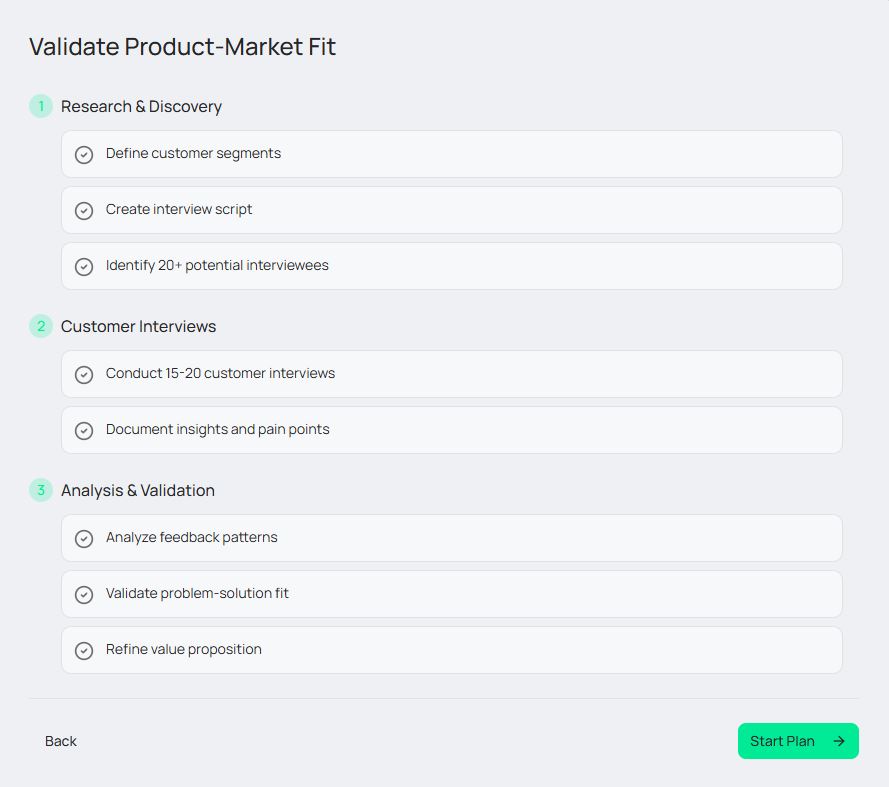
The final product reflects how variable and flexible a business is, adapts to any kind of founder, at any stage of their business journey. It drastically simplifies the addition of data (by dropping files or connecting software), automatically sorts it out into the relevant units and analyzes your business and gives you the best next step. With their important (but boring) data hidden in the backend, users can now focus on their main goal: making their business as good as possible.
RESULTS
A platform that suits users' real needs
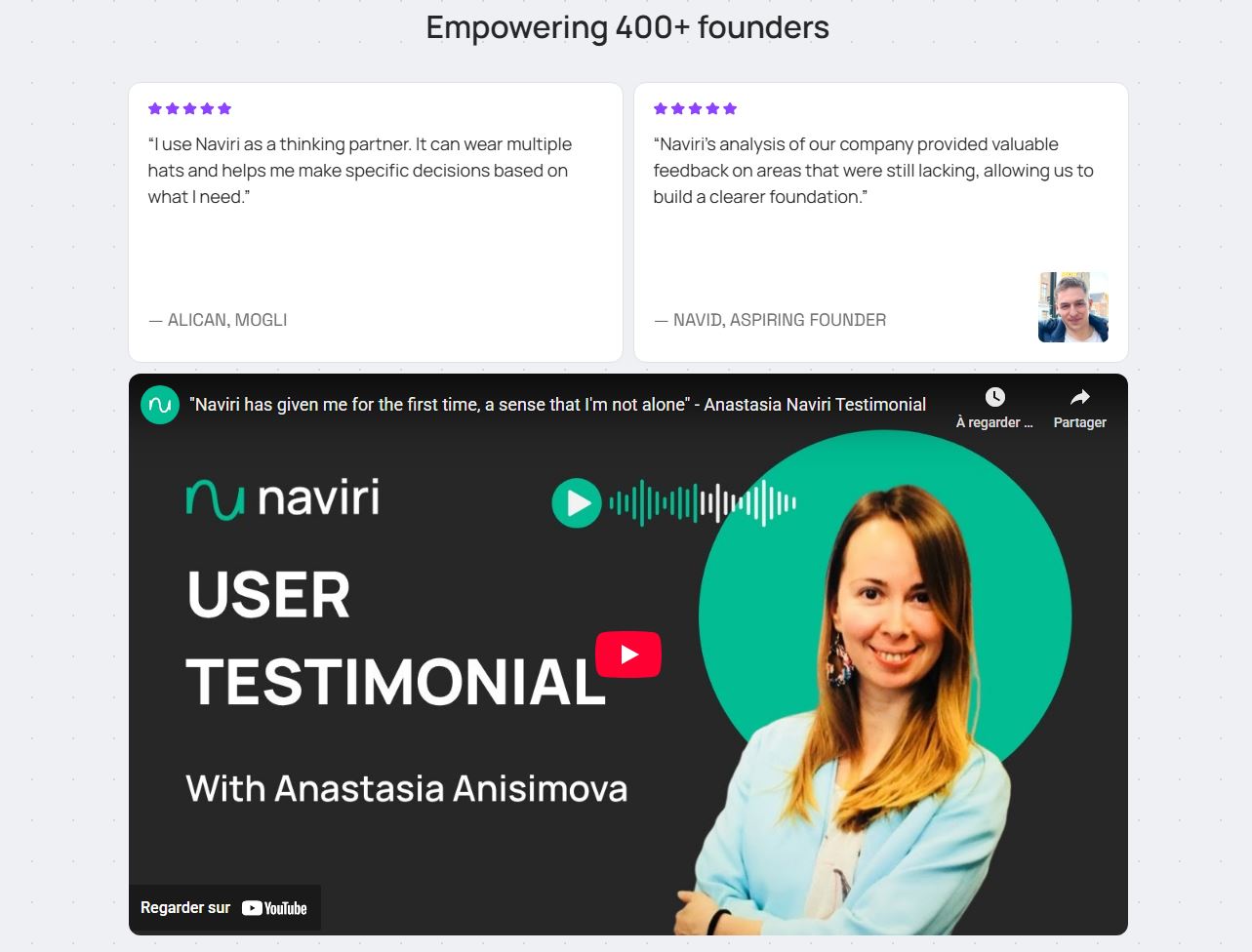
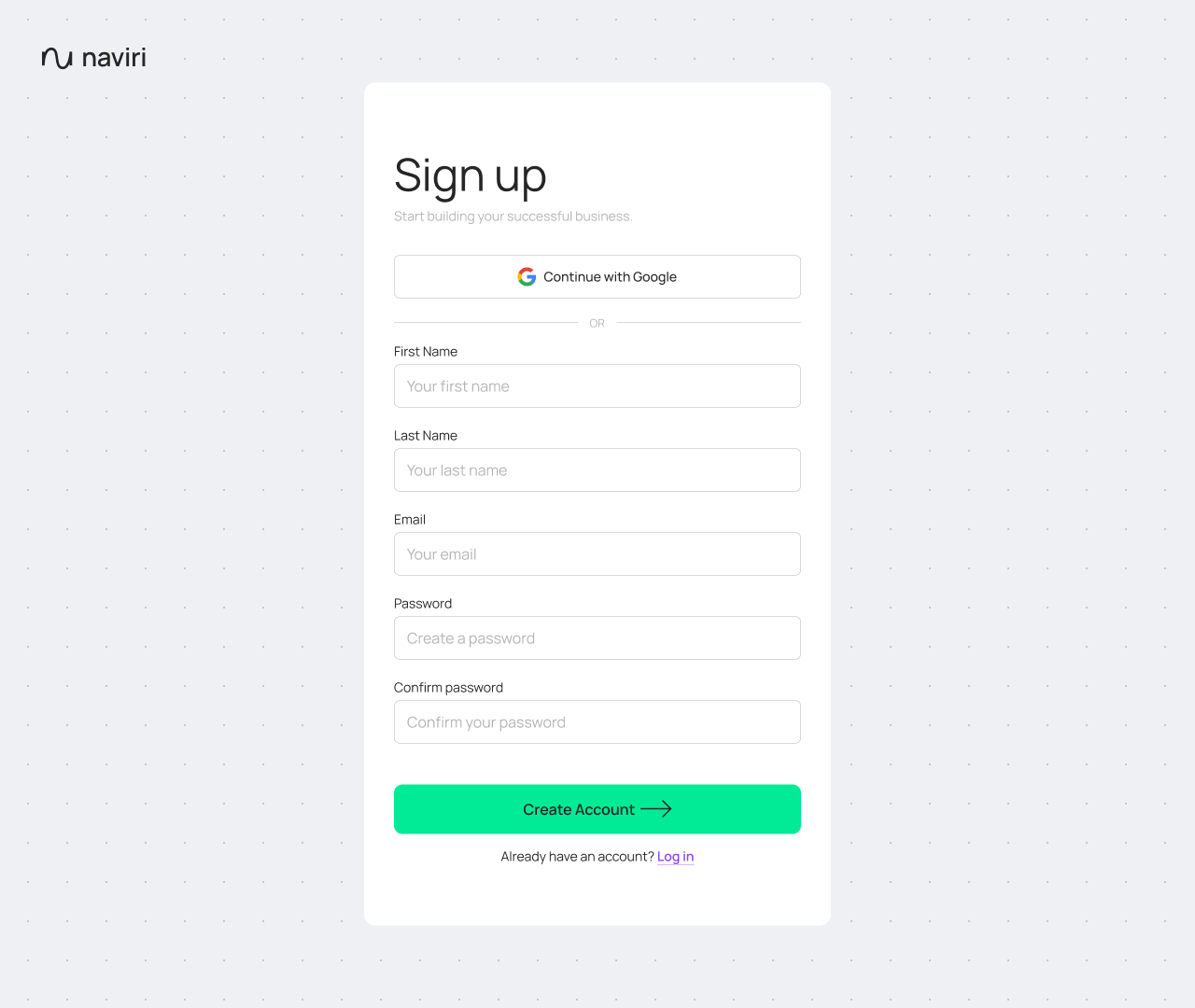
With a significantly reduced onboarding friction, high-quality answers from the AI and a product tailored to their company, users showed increased interest in our startup OS. Although my time at Naviri has come to an end, I wish them the best for what's to come, and I am really proud of how much I contributed to evolving the product's direction. Thanks to my responsibilities, I also learned a ton in a single year.
TAKEAWAYS
What I learned
Talk to users often
Building based on assumptions wastes time and resources. Your product must suit users, not you.
Don't be afraid to pivot
Attachment to ideas is a product killer. If data backs it up, changing direction is critical for success.
Think about everything
A product has many screens and edge cases: error states, empty content, unexpected user flows...